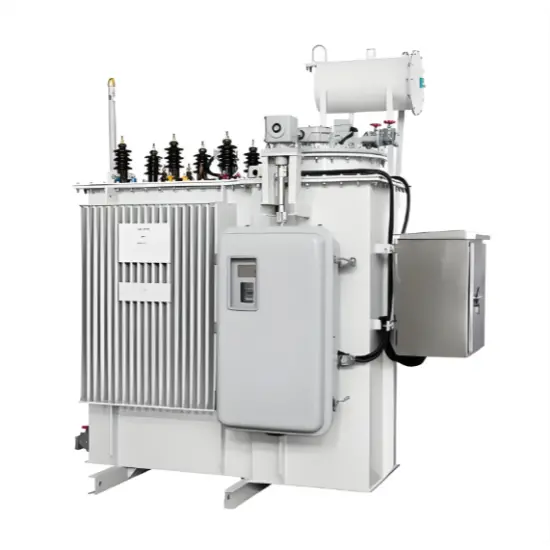
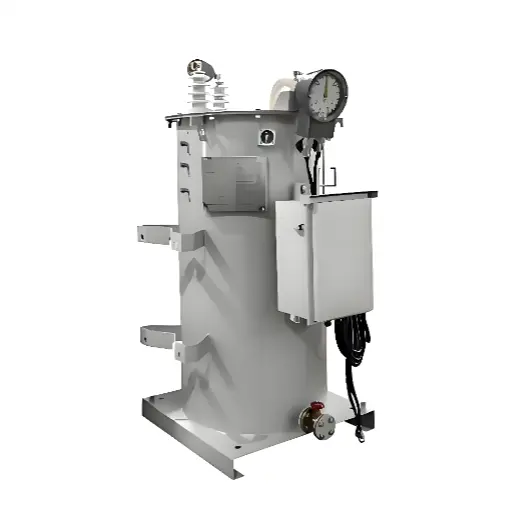
Rockwill delivers integrated electrical solutions for smart grids, urban infrastructure, renewable integration, and industrial applications. From medium-voltage automation to EV charging networks and prefabricated substations, our systems ensure stable, efficient, and future-ready power distribution. Customized. Connected. Reliable.
Adaptation Solution for Special Environments and Severe Working Conditions: Ensuring Stable Operation of Voltage Regulator Even in Extreme Conditions
In scenarios such as underground mines, offshore drilling platforms, chemical parks and desert photovoltaic power stations, regulators must withstand not only normal working pressure but also extreme challenges including corrosion, humidity, salt spray, dust, high temperature and flammable and explosive gases. Ordinary regulators are prone to insulation failure, metal corrosion, seal aging and even safety accidents in such environments, leading to production interruptions and potential safety hazards.
We launch an adaptation solution for special environments and severe working conditions, with all-round enhancements in protection grade, material technology and safety certification, to ensure the long-term stable operation of regulators even under the harshest conditions.
1. Core Pain Points: How Severe Environments Damage Ordinary Regulators?
- Corrosion and salt spray: High salt content in the air of offshore platforms and coastal chemical zones causes rust spots on ordinary carbon steel shells within a few months and accelerates the aging of internal components;
- Humidity and condensation: In underground mines or tropical rainforest climates, moisture invades the inside of equipment, leading to a drop in insulation resistance and coil short circuit;
- Dust and particulates: High dust concentration in metallurgical plants, cement plants and other places easily clogs heat dissipation holes and wears mechanical transmission parts;
- Fire and explosion risks: Flammable gases or vapors exist in chemical parks and oil and gas fields, and ordinary regulators may generate sparks and trigger explosions;
- Temperature difference and vibration: Severe vibration and day-night temperature difference of equipment on offshore platforms and in mines cause easy loosening of mechanical structures and seal failure.
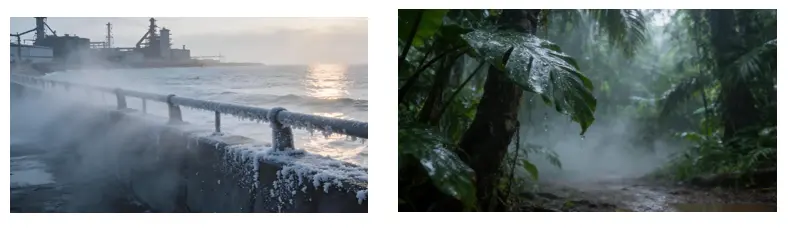
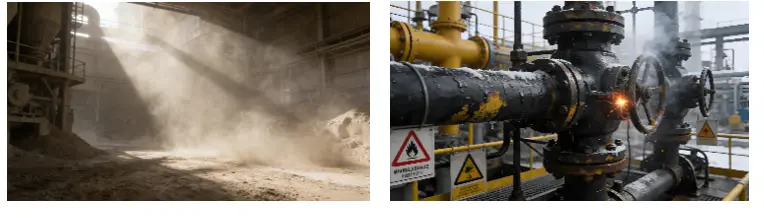
Ordinary regulators are not designed with these complex stress factors in mind at the beginning, and can only operate in the ideal laboratory environment.
2. Protection Grade: Starting from IP54 to Achieve True Fully Enclosed Protection
We provide graded protection strategies for different environments:
- Outdoor regulators: Minimum protection grade IP54, with dust and splash water resistance, suitable for sandstorm, rain and snow weather;
- High humidity/salt spray environments: Upgraded to IP55/IP65, adopting a fully sealed cavity design with internal potting of moisture-proof resin to prevent moisture and salt spray penetration;
- Explosion-proof regulators: In hazardous areas such as chemical and oil & gas industries, flameproof enclosures and increased safety structures are adopted with protection grade up to IP66, combined with explosion-proof certification to achieve double insurance of physical isolation and electrical safety.
Result: No corrosion on the equipment surface and no condensation inside, enabling continuous operation in a wide temperature range of -40℃~+85℃.
3. Material Technology: Three-Layer Protection for Corrosion Resistance, High Insulation and Long Service Life
We make full efforts in material selection and processing technology to enable regulators to withstand severe environments:
Special Anti-Corrosion Coating
- The shell is made of hot-dip galvanized steel sheet or 316L stainless steel, with a surface sprayed with polyurethane anti-corrosion paint (salt spray resistance ≥1000h);
- Coating thickness ≥120μm, UV aging resistant, suitable for strong sunlight environments in deserts and offshore areas.
Multi-Layer Sealing Technology
- Fluororubber sealing rings are used for wiring ports and heat dissipation holes, resistant to oil, ozone, high and low temperatures;
- Sealing rubber rings and waterproof washers are added to flange connection surfaces to prevent dust and water vapor from entering.
Epoxy Resin Casting Process
- Vacuum epoxy resin casting is applied to high-voltage coils and low-voltage control circuits to form an integrated insulation structure;
- Insulation performance is improved by more than 3 times, with a moisture-proof grade of Class H, suitable for long-term operation in high humidity and condensation environments.
4. Safety Certification: Making Explosion-Proof a Standard Configuration, Not an Option
Safety is the only bottom line in flammable and explosive places. Our regulator series have obtained a number of authoritative certifications:
- Explosion-proof certification: Compliant with IECEx standards and holding Ex d IIC T4 Gb grade certificates, suitable for high-risk gas environments such as hydrogen, acetylene and ethylene;
- Classification society certification: Passed offshore equipment certifications such as CCS and DNV-GL, meeting the salt spray and seismic resistance requirements of offshore platforms;
- Mine certification: Obtained MA (Coal Mine Safety Mark) certification, applicable to explosive gas environments such as gas mines.
Significance: Not only meeting local regulations, but also eliminating potential obstacles for users in safety review and insurance claims processes.
5. Value Proposition: One-Time Investment, Ten Years of Peace of Mind
- Extended equipment service life: In salt spray and corrosive environments, the service life of ordinary regulators is about 3-5 years, while this solution can extend it to more than 10 years;
- Reduced operation and maintenance costs: Reducing the number of fault shutdowns caused by corrosion and moisture, and the operation and maintenance frequency is reduced by 60%;
- Guaranteed safe production: Explosion-proof design and multi-layer sealing eliminate the risks of sparks and insulation failure from the source, protecting the safety of personnel and assets;
- Adaptation to future expansion: The modular structure facilitates later protection upgrade or addition of intelligent monitoring modules, meeting the trend demands of smart mines and digital oilfields.
Successful Case
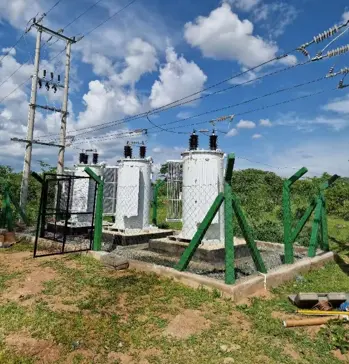
Rockwill's special environment-adaptive voltage regulation device is applied to the rural power grid upgrade in the African savanna. Relying on the IP65 fully sealed shell, weather-resistant anti-corrosion coating, integrated lightning protection and wide temperature range wind-resistant design, it successfully copes with extreme challenges such as high temperature and humidity, strong ultraviolet rays, rainstorms and lightning, achieving stable voltage control and zero shutdown operation. It provides reliable power for local communities and agricultural irrigation, becoming a benchmark for intelligent voltage regulation in tropical regions.
For more details, please click the link below:
Conclusion
Severe environments are not a forbidden zone for regulators, but a touchstone for testing quality. Our adaptation solution for special environments and severe working conditions, with high protection grades, special material technologies and authoritative safety certifications, provides all-weather and full-working-condition reliable voltage control protection for scenarios such as mines, offshore platforms and chemical parks.
Recent Solutions