SF₆ Green Substitution: Full-Stack Compliance Upgrade for High-Voltage Dead Tank Circuit Breakers
I. Risk Analysis: SF₆ Environmental Compliance Challenges and Empirical Cases
Traditional high-voltage dead tank circuit breakers primarily use SF6 gas as the arc-extinguishing and insulation medium. However, SF6 is a potent greenhouse gas with a Global Warming Potential (GWP) 23,900 times that of CO2 and an atmospheric lifetime of 3,200 years, making it inconsistent with global environmental policies. Current regulations, such as the Kyoto Protocol and the EU’s "F-gas Regulation," strictly limit SF6 usage. Meanwhile, vacuum circuit breakers face insulation saturation issues across long gaps, making them difficult to adapt for EHV/UHV applications. Developing SF6 alternatives is now an urgent industry requirement to avoid policy compliance risks and economic losses.
Typical Cases:
-
Export Setback: A European export project involving high-voltage dead tank breakers failed product certification because it used traditional SF6 media, violating the EU "F-gas Regulation." This resulted in project stagnation and direct economic losses exceeding 3 million RMB.
-
Domestic Leakage: A domestic substation utilized a batch of SF6 dead tank breakers that suffered from poor sealing, leading to a 5% annual leakage rate. This not only increased O&M costs but also triggered risks of environmental penalties, failing to meet the grid's green transformation standards.
II. "Trinity" Green Path: Alternative Media, Equipment Innovation, and Closed-Loop Recovery
To address SF6 substitution and compliance, we implement a three-pronged approach—media replacement, equipment R&D, and gas recovery—to eliminate environmental non-compliance:
-
Application of SF6 Alternative Gases: We utilize eco-friendly gas mixtures (such as SF6/N2 or SF6/CO2) or pure green gases. By reducing SF6 content to below 5% in mixtures, we significantly cut greenhouse gas emissions while maintaining the insulation and arc-extinguishing performance required for high-voltage operation.
-
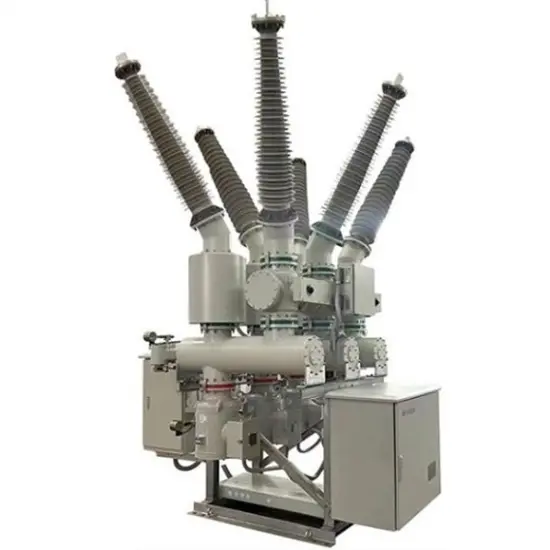
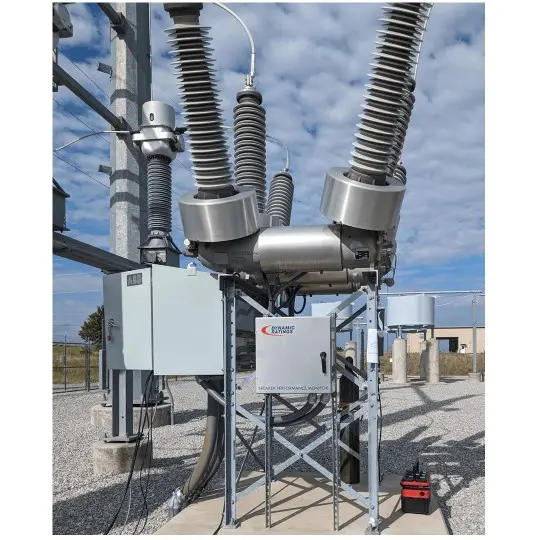
Eco-Friendly Equipment R&D: To solve the insulation saturation of long-gap vacuum breakers, we employ a multi-break structure consisting of several short vacuum gaps in series. Combined with a dead tank design, we have developed fully eco-friendly multi-break vacuum breakers compatible with HGIS/GIS. This eliminates SF6 usage entirely and adapts perfectly to high-voltage scenarios and modular substation construction.
-
Gas Recovery and Reuse: We deploy specialized equipment for the recovery, purification, and reuse of SF6 gas. Leaked or serviced gas from existing dead tank breakers is treated and reused, reducing waste and pollution. A digital gas recovery ledger is maintained to ensure full environmental compliance.
III. Value Realization: Certification, Cost Optimization, and Green Transformation
Implementing this solution resolves the environmental shortcomings of high-voltage dead tank breakers, aligning with global "F-gas bans" and avoiding regulatory penalties. Based on application experience, export projects can successfully pass environmental audits, while existing domestic equipment sees a sharp drop in leakage rates and O&M expenses. This strategy drives the green transformation of the power grid, ensuring that equipment is environmentally friendly, compliant, and stable.
Success Case Details:Breaking the EU "SF₆ Ban": Green Alternatives for High-Voltage Dead Tank Circuit Breaker Successfully Safeguard European Projects-Rockwill