Intelligent O&M for 40+ Units of 170kV Dead Tank Circuit Breakers: Real-Time Fault Warnings and Drastic Cost Reductions
Project Overview
A regional power grid previously relied on manual, offline inspections for over 40 units of 170kV dead tank circuit breakers (consuming 5 days every 6 months, costing over 200,000 RMB annually). In 2024, an undetected internal free metal particle caused partial discharge, leading to interrupter damage, a 72-hour power outage, and losses exceeding 800,000 RMB. Our company urgently deployed an "Integrated Intelligent O&M Solution", installing a four-dimensional sensor array (ultrasonic PD, temperature/pressure, and vibration) and building a cloud-based AI diagnostic platform. Since implementation, the system has precisely warned of two metal particle hazards, reduced individual repair time to under 1.5 hours, and lowered annual O&M costs to 78,000 RMB (a 61% reduction), establishing a new paradigm of "zero unplanned outages and high reliability."
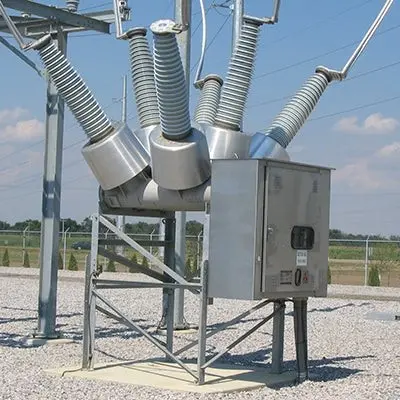
Exceptional Design · Root Cause Eradication
-
Holographic Sensing Layer: A micro-sensor array is embedded at key tank locations to transmit data on PD, temperature, SF6 concentration, and vibration in seconds, providing a panoramic view of equipment status.
-
Intelligent Diagnostic Layer: AI algorithms accurately identify 50Hz/100Hz characteristic PD signals with over 98% warning accuracy and centimeter-level fault localization, automatically pushing mitigation suggestions.
-
Efficient O&M Layer: Modular quick-dismantling structures and automated SF6 recovery equipment reduce manual reliance by 80%. The platform automatically generates digital reports, replacing traditional, labor-intensive offline inspections.
Empowering Infrastructure Development
This solution has been solidified into the "Technical Guidelines for Intelligent O&M of High-Voltage Dead Tank Circuit Breakers" and has been implemented at scale across power grids in 6 provinces in East and Northwest China. It currently covers over 200 units, has warned of 23 latent faults, and averted economic losses exceeding 16 million RMB. Through the "Sensing-Diagnosis-O&M" intelligent closed-loop, we are driving grid maintenance from "periodic repair" to "condition-driven" strategies, providing a replicable Chinese practice for the safety, resilience, and digital transformation of new power systems.